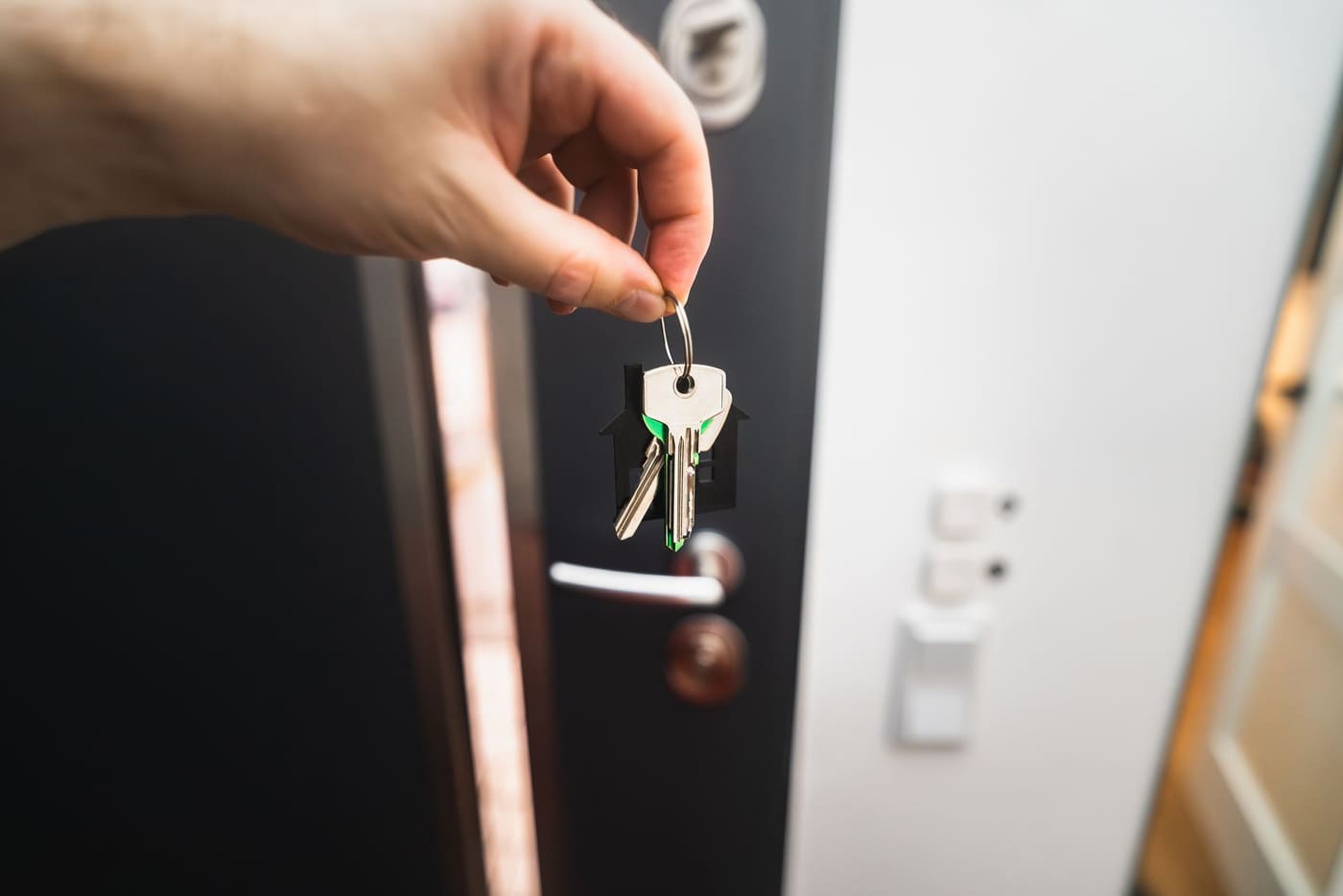
You can make a front door much more secure without replacing it by fitting a heavy strike plate with long screws, upgrading the deadbolt, reinforcing the jamb and hinges, and improving light and visibility around the entry. The door slab is rarely the first thing to fail. The frame around the lock is.
Replacing a front door can cost from several hundred to a few thousand dollars, and a new door in a weak frame is still weak. A targeted upgrade of the lock, strike and frame often costs far less and takes an afternoon. Police crime-prevention guidance points to the same weak spot: when a door is kicked, the strike plate and its short screws give way and the frame splits. This guide covers what to check, what to fit and in what order. For other doors and windows, see how to make doors and windows more secure.
Check what you have first
Spend ten minutes with the door before buying anything.
- Material: knock on it. A hollow sound means hollow-core, which is not suited to an exterior door. Solid wood, solid-core, steel and fiberglass doors are all reasonable.
- Lock set: is there a deadbolt in addition to the knob or handle latch? A spring latch alone is easy to defeat.
- Strike plate: look at the metal plate on the frame where the bolt enters. Remove one screw. If it is only about 3/4 inch long, it holds into the thin jamb and nothing else.
- Frame: press the jamb near the lock and look for cracks, soft spots, rot or gaps between frame and wall.
- Hinges: check whether the screws are short.
- Fit: if the bolt barely reaches into the strike, or you must lift the door to turn the key, the fit is poor.
- Glass: is there a window or sidelight within reach of the lock?
Upgrade the strike plate and screws
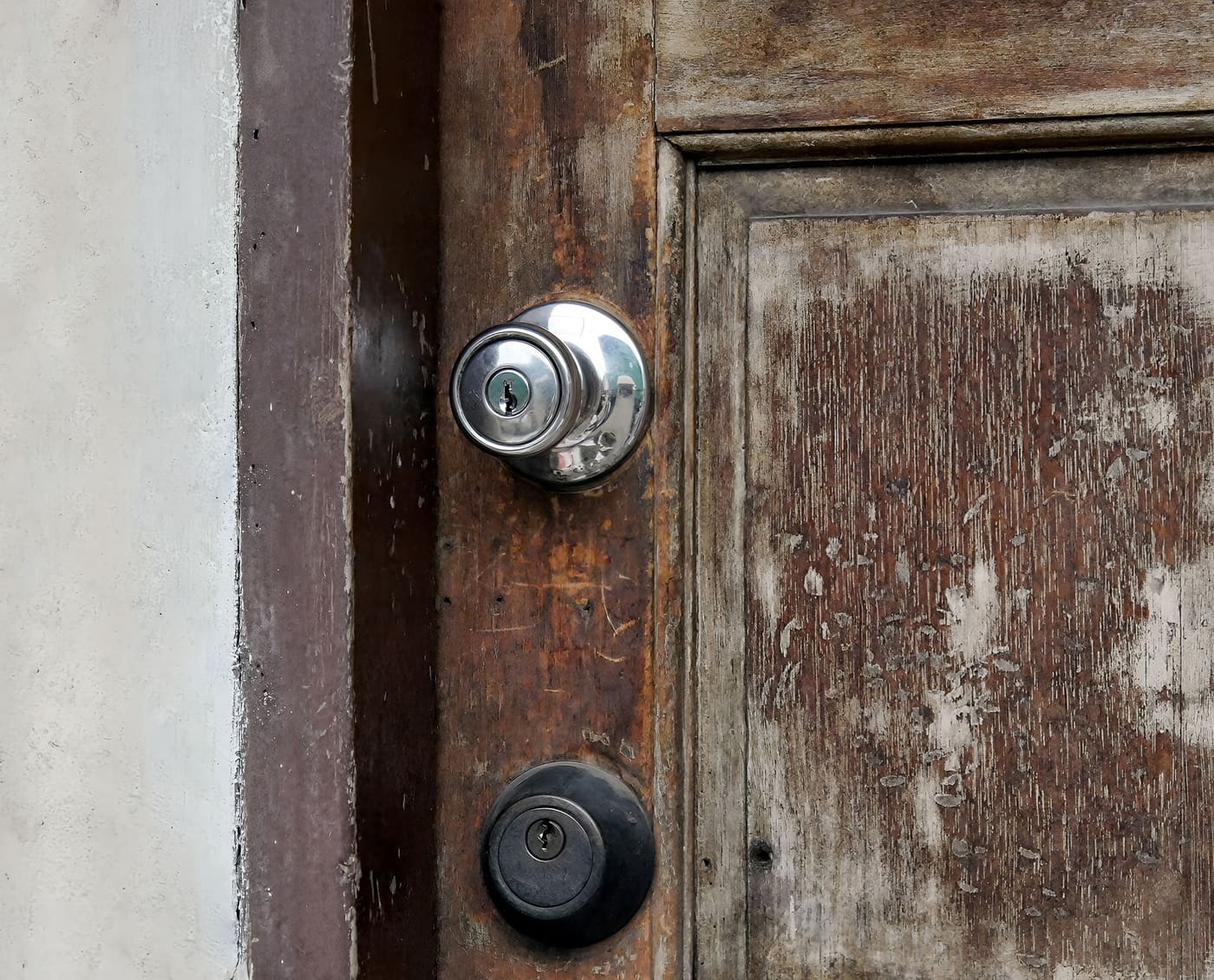
This is the best value for the lowest cost. Short screws pull out of a thin jamb and the wood splits, so the fix is to anchor the plate to the structure behind it.
- Remove the existing strike plates for the deadbolt and the latch.
- Fit heavy-duty plates, usually longer metal plates with several screw holes that spread force over a wider area.
- Drive screws about 3 inches long (some guides say up to 4) through the plate and jamb into the stud behind. Drill a pilot hole to avoid splitting the wood.
- Use longer screws for the lock hardware on the door side if the existing ones are short.
- Test that the bolt still lines up and extends fully into the plate.
If the jamb is cracked, extra screws will not fix it. A cracked jamb needs repair or replacement, which is carpentry work. If your home was built before 1978, painted trim may contain lead, and the U.S. Environmental Protection Agency advises against sanding or scraping it without proper precautions.
Replace or add a quality deadbolt
If the current deadbolt is a thin, builder-grade unit, or there is none, fit a Grade 1 or Grade 2 single-cylinder deadbolt. Grades come from the Builders Hardware Manufacturers Association’s residential deadbolt standard, where Grade 1 is the highest. Look for:
- A bolt that extends at least 1 inch, as police prevention guides recommend.
- A hardened steel bolt.
- A snug fit in the door bore, not a loose or wobbling lock.
Swapping a deadbolt into an existing bore is manageable with a screwdriver. Cutting new holes needs a hole saw and care, and a locksmith or carpenter can do it. If you want a keypad or smart lock, it can use the same bore, but the physical lock and frame still do the real work.
Avoid double-cylinder deadbolts, which need a key to open from inside. They can slow your own exit in a fire and are restricted by some local codes.
Reinforce the frame and hinge side
Once the strike is solid, consider the whole frame:
- Jamb reinforcement kit: a metal strip that wraps the lock-side jamb and screws into the framing.
- Door edge reinforcer: a metal sleeve around the edge that holds the lock, which keeps the wood around the bore from splitting.
- Hinge screws: replace one screw per hinge leaf with a long one into the stud so the hinge side resists force.
- Hinge pins: on outward-opening doors the pins are exposed, so set screws or non-removable pins stop them being tapped out.
| Upgrade | Difficulty | Benefit |
|---|---|---|
| Long strike plate screws | Easy | Large |
| Heavy-duty strike plate | Easy | Large |
| Grade 1 or 2 deadbolt | Moderate | Large |
| Jamb reinforcement kit | Moderate | Medium to large |
| Edge reinforcer sleeve | Moderate | Medium |
| Hinge screws and pins | Easy | Medium |
| Security film on nearby glass | Moderate | Medium |
Most hardware like this is sold for a few dollars up to a few tens of dollars per item, with a deadbolt usually costing more. Check current prices locally.
Improve visibility and lighting
A door that is clearly visible is harder to attack quietly. Think about the entry as a whole:
- Door viewer or video doorbell. A wide-angle viewer is a cheap way to see who is there, and a doorbell camera adds a record. Placement matters, as covered in where to place security cameras.
- Lighting. A steady, shielded light at the door plus a motion light on the approach. See what lighting and deterrence actually help.
- Landscaping. Keep shrubs beside the porch low so nobody can stand hidden next to the door.
- House numbers. Large, clear numbers help visitors and emergency responders find you.
If the door has glass near the lock, apply security film or replace the pane with laminated glass so someone cannot break it and reach the thumb latch.
Fix the way you use the door
Hardware cannot make up for habits. Use the deadbolt every time, including when you are home. Do not hide a key outside; give a spare to a neighbor you trust. Do not prop the door open while loading the car. Check that it actually latches after closing, since a swollen door or worn weatherstripping can leave it ajar. Rekey or replace the lock after moving in, after losing a key, or after contractors or tenants have had access. More routines like these are in what daily habits help keep a home safer.
When replacement or a pro makes sense
An upgrade is not always enough. Consider a new door or professional repair if:
- The door is hollow-core, warped or has a cracked slab.
- The frame is rotted, split or loose in the wall.
- The door does not close squarely and adjusting the hinges does not fix it.
- It is a fire-rated or code-regulated door, such as one between a garage and the house.
- You want hardwired electronic hardware, which a licensed electrician should handle.
Call a locksmith for rekeying, bore cutting or lockouts, a carpenter for frame repair and an electrician for any wiring. Building and fire codes vary, particularly for exit doors, so check requirements before making structural changes.
Where this comes from
This guide draws on city police department crime-prevention guidance on door security (strike plates, screw length, deadbolt throw), the Builders Hardware Manufacturers Association’s residential deadbolt standard, and the U.S. Environmental Protection Agency’s guidance on lead paint in older homes. Prices change and vary by region, so check current figures with local suppliers before buying.